

Responding to Transport Policy Developments
Towards a people-centred, safe and sustainable transport future.

Hong Kong has an exceptionally efficient public transport network and a compact urban form — strong foundations for green mobility. Yet conventional transport planning here remains trapped in predict-and-provide, car-first thinking: endless road expansion, a private car fleet that keeps growing, worsening congestion, and the steady erosion of precious public space.
With road space this limited, blindly accommodating private car growth no longer makes sense. The logic of planning has to change, and policy has to redefine the role each mode plays. A street is not only a road — it is part of the city's public space, and road resources must be allocated first to sustainable modes.
As future mobility technologies such as autonomous driving arrive, we stress that technology must never become an excuse for extending car dominance. New technology has to serve human-oriented planning principles, with the safety of vulnerable road users as its absolute first condition.
We advocate for the Government to firmly establish a Hierarchy of Modes in its future transport strategy. Only by systematically prioritising walking, cycling and public transport, committing to a vision of zero road deaths and serious injuries, and actively managing private car demand can Hong Kong's urban design truly break free from car dominance and move towards more human-centred, forgiving and liveable streets.
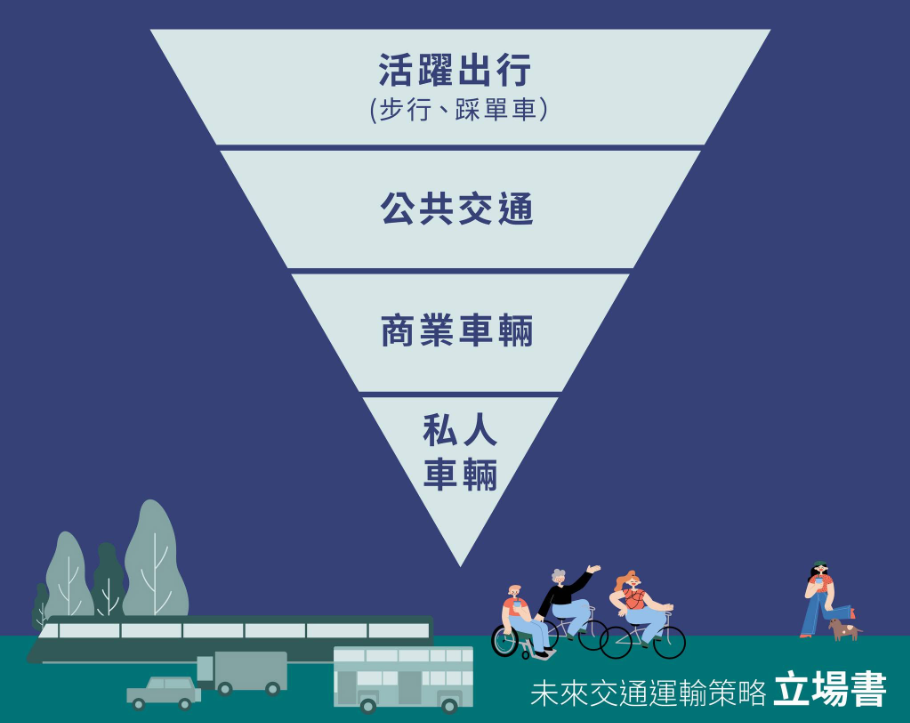
Reprioritising Modes
Put the needs of walking, cycling and public transport first in how resources and policy are allocated, creating a better travel experience so they become the everyday modes people choose.
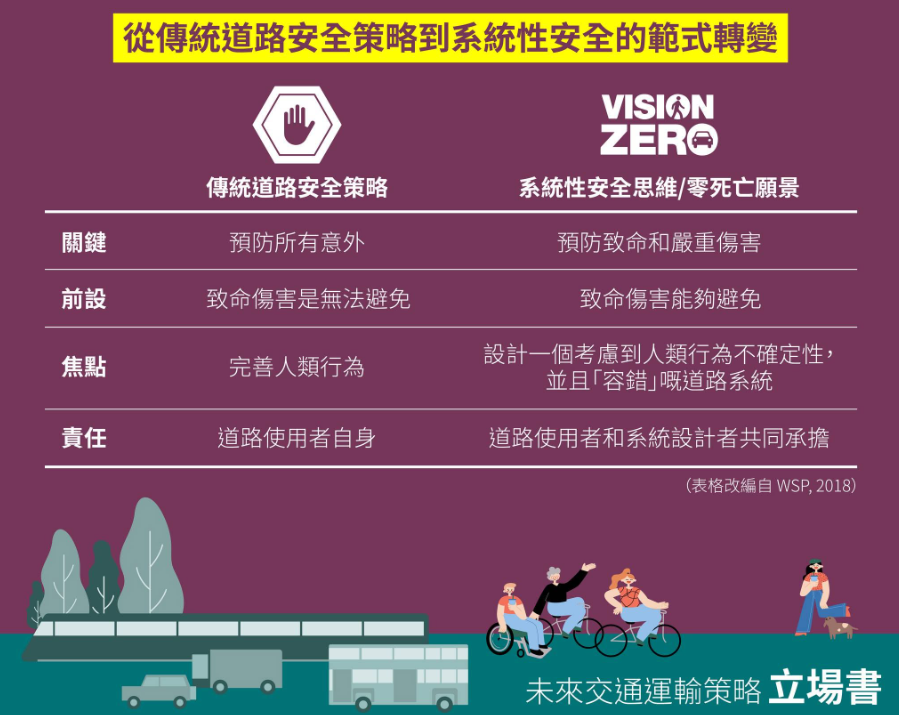
Zero Deaths and Serious Injuries
Make Vision Zero a core objective of long-term transport strategy and put the Safe System Approach into practice, driving forgiving street and vehicle design that works to prevent every death and serious injury.
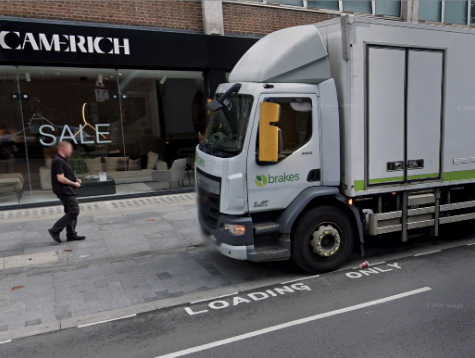
Efficient Allocation of Road Space
Manage private car demand actively through road pricing, and reform kerbside policy: tighten the supply of private car parking to curb growth, prioritise loading and parking needs for commercial vehicles instead, and reallocate street space to the modes that genuinely deliver.
Reset the priorities, put people first.
Learn more about our work and how you can support human-oriented transport policy.
Visit our site